
Extend your Cerebellar Assessment with Eye Movements
Cerebellar ataxia is a neurological disorder characterized by deficits in coordination, balance, and motor control resulting from damage to the cerebellum itself or to the cerebellar pathways.
CURRENT LIMITATIONS
Challenges in Cerebellar Assessment: Limited Sensitivity and Overlapping Symptoms
Sensitivity of current methods
While diagnosis typically involves clinical examination, imaging, and genetic testing, these approaches do not allow for objective and quantified functional assessment, particularly in early or atypical cases and for longitudinal monitoring.
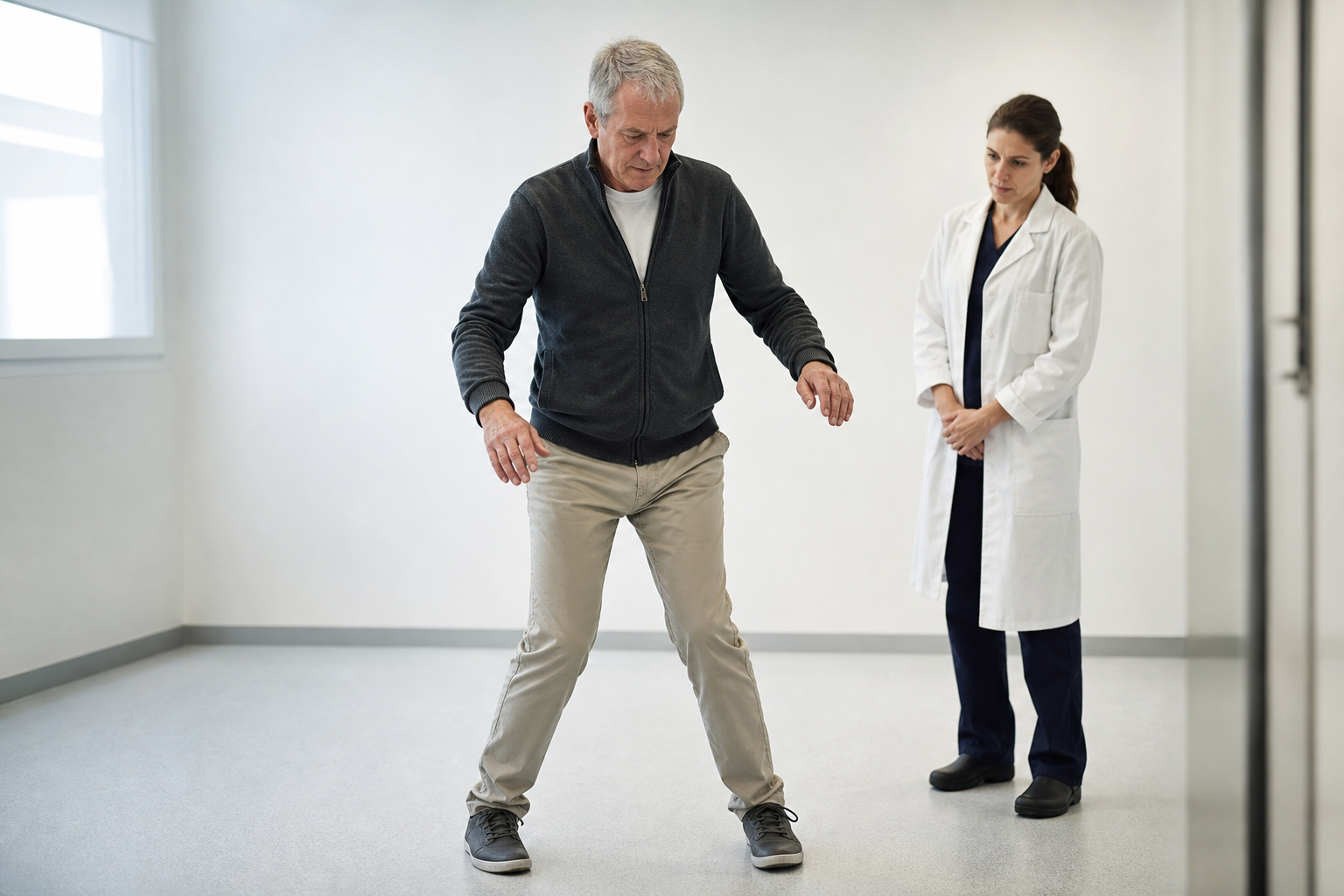
Symptoms overlapping
Cerebellar syndromes can be confused with other neurological diseases. This can complicate diagnosis, can delay appropriate intervention and can make the evaluation of treatment effectiveness difficult.
Eye movements abnormalities are hallmark features of cerebellar impairment and often precede overt motor symptoms1, 2, 3.
Saccadic impairment
Dysmetria (Hypermetria or Hypometria)
Ocular misalignment
Esophoria or Exophoria
Fixation impairment
Nystagmus and saccadic intrusions
Pursuit impairment
Jerky pursuit with catch-up saccades
Vestibular impairment
Impaired vestibulo-ocular reflex (VOR)
.png?width=800&height=412&name=EP-038%20Cerebellar%20structure%20Brochure_EN_v1.0%20(4).png)
1 Leigh RJ, Zee DS. Disorders of Ocular Motility Due to Disease of the Brainstem, Cerebellum, and Diencephalon. In: Leigh RJ, Zee DS, eds. The Neurology of Eye Movements. Oxford University Press; 2015:0. doi:10.1093/med/9780199969289.003.0013
2 Bodranghien F, Bastian A, Casali C, et al. Consensus Paper: Revisiting the Symptoms and Signs of Cerebellar Syndrome. Cerebellum. 2016;15(3):369-391. doi:10.1007/s12311-015-0687-3
3 Manto M, Bower JM, Conforto AB, et al. Consensus Paper: Roles of the Cerebellum in Motor Control—The Diversity of Ideas on Cerebellar Involvement in Movement. Cerebellum. 2012;11(2):457-487. doi:10.1007/s12311-011-0331-9
BIOMARKER BASED APPROACH
Oculomotor assessment with neuroClues®
From Setup to Insight in Minutes
Objective and rapid oculomotor evaluation made simple with neuroClues®
neuroClues® offers a compact, non-invasive solution for monitoring eye movements in clinical practice in an objective and reproducible way. With minimal setup and no patient calibration, clinicians can perform standardized recordings of saccades, fixation, and pursuit in about 10 minutes. Biomarkers and timecourses are automatically computed and displayed next to reference ranges for simple interpretation and timely decisions.
Reason for Consultation
Suspected cerebellar syndrome.
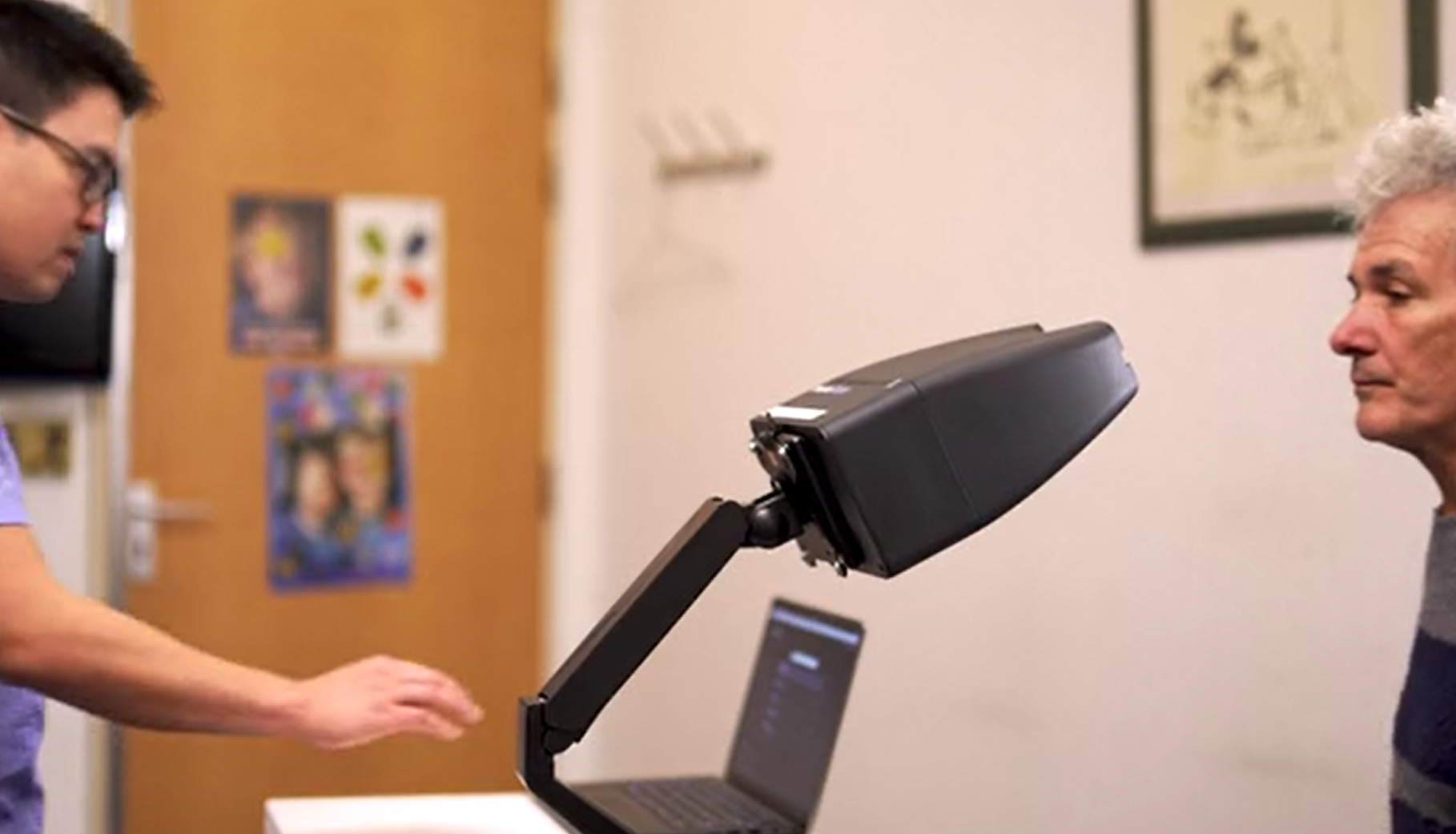
neuroClues® Assessment
Execute selection of Protocols for Cerebellar assessment.
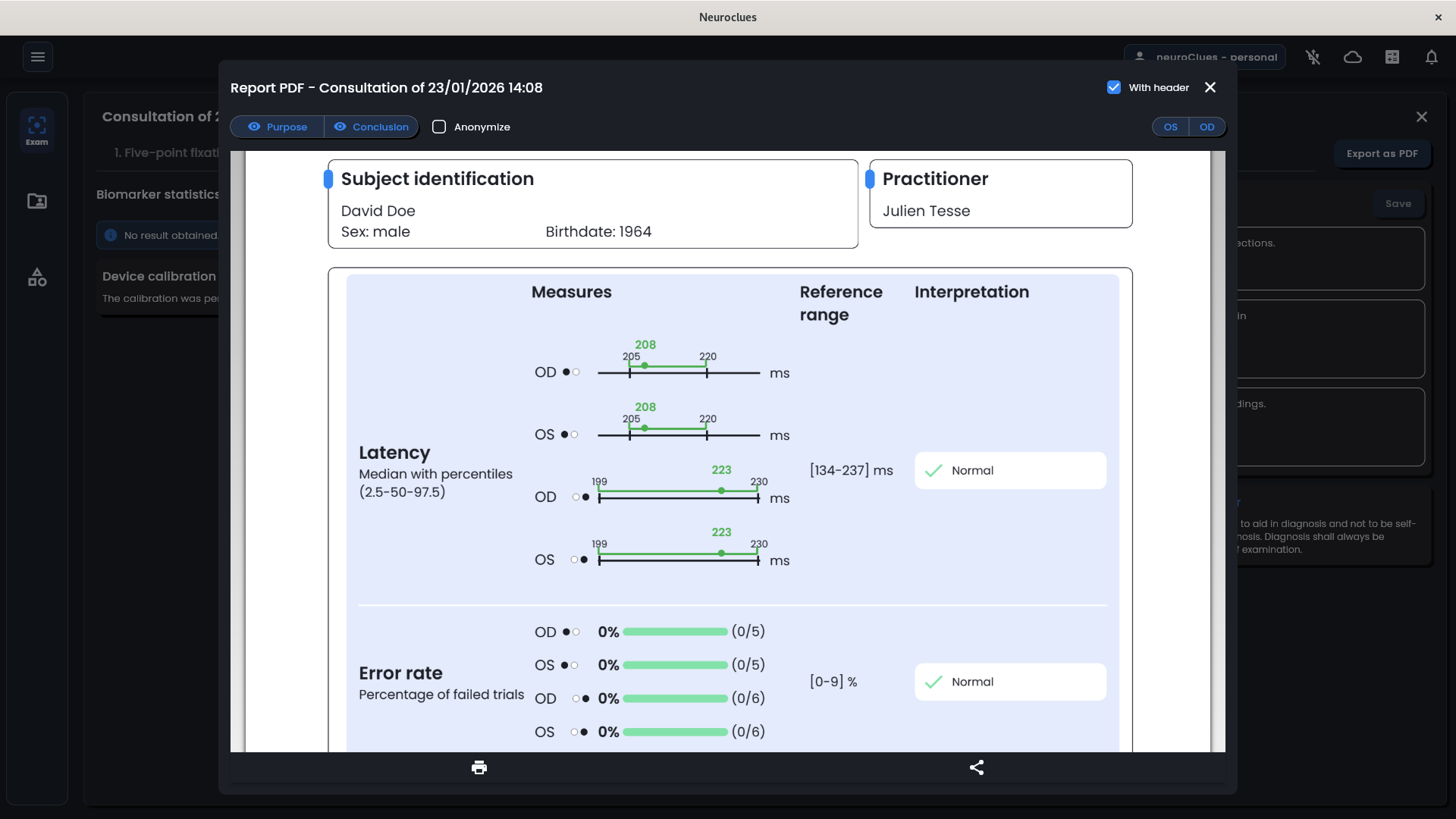
Interpretation & decision
Evidence supporting the diagnostic hypothesis.
Examples of recording with neuroClues®